

Club Kid, dir. Jordan Firstman

Club Kid
Club Kid is the feature directorial debut from comedian and actor Jordan Firstman, who also writes and stars in the film. When Peter (Firstman), a gay club promoter and frequent partygoer, discovers that he has a 10-year-old son named Arlo (Reggie Absolom) who is unexpectedly placed in his care, he must learn how to fit a child into his very adult lifestyle. The film explores parenthood from a new perspective, asking when familial relationships can be built and what shape those relationships take.
The greatest strengths of Club Kid lie in its screenplay and performances, with each lending the film a sense of groundedness and filiality that can be difficult to capture, and its script elevates a predictable story into one which subverts expectations. The beats of this story have been trodden before, but they feel unique here and are able to develop to their full potential through the particular dramatic tensions of the script, especially in their relation to queerness and club culture. Firstman is an obvious star in Club Kid, perfectly balancing drama with comedy through his character and imbuing Peter with a distinct and familiar personality. Absolom similarly hits this tonal balance, imbuing his character with a dark undertone that seeps out in moments of distress and disturbance.
One can easily draw comparisons between Club Kid and films like Uptown Girls (2003), C’mon C’mon (2021) and Big Daddy (1999), each of which shares themes of children and adults bonding in unconventional ways. In Club Kid, this bond is formed through Peter’s openness and vulnerability with Arlo, allowing him into his rather adult world while making concessions and alterations for the sake of Arlo’s innocence and history. The film gets you to care deeply about these characters and the impacts, both positive and negative, that they have on each other. Sweet but not overly saccharine, the audience was sniffling or stifling sobs by the end of my screening. Check this one out for a very human and tender experience. Highly recommend!
Fjord, dir. Cristian Mungiu
Fjord
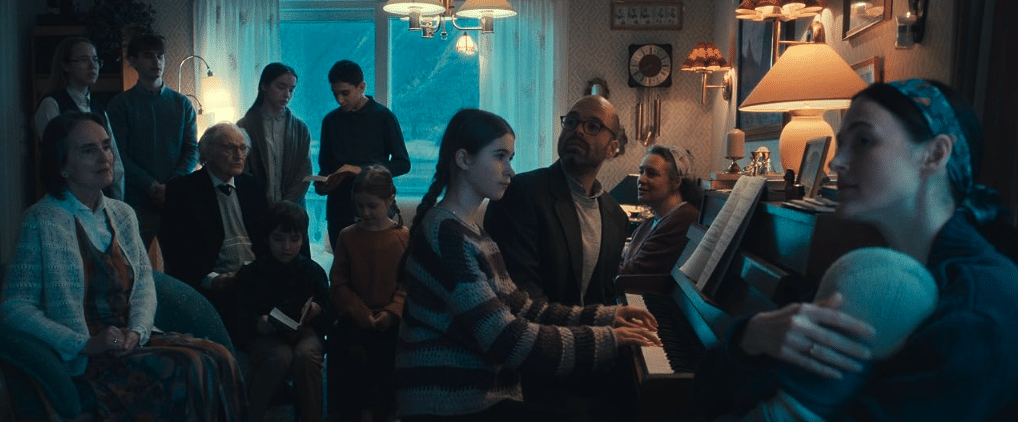
Fjord, the latest film from director Cristian Mungiu, tells a deeply conflicting story about the Gheorghiu family, recent immigrants to Norway from Romania. When evidence is found to suggest that the children of the family might be suffering abuse from their parents (Sebastian Stan, Renate Reinsve), the Norwegian state is quick to intervene. This creates a ripple effect of difficulties that tests the resilience of the Gheorghiu family and surrounding community. Mungiu leaves the audience to fill in the blanks of what really happened based on what we discover about these characters and their lives over the course of the film.
Fjord has left audiences somewhat divided due to its controversial subject matter and unwillingness to provide clarity to viewers. The film’s murkiness around child abuse and what truly constitutes abusive behaviour, especially when presented alongside themes of religious oppression and state-sanctioned familial separation, is complicated, to say the least. As more details emerge about the nature of the Gheorghiu family—their fundamentalist Christian beliefs, the quiet rage exhibited by Mihai (Stan) at any implication of wrongdoing, and the children’s tiptoeing around the kinds of physical punishment they receive—more questions arise for the viewer about the legitimacy of Child Protection’s case and the family’s true political interests.
The performances in Fjord vary, with the child actors being the least engaging, likely due to having to perform outside of their native languages. Stan and Reinsve are the actors of note in this piece, alongside Lisa Carlehed, with each providing considerable nuance and weight to their respective characters.
Fjord asks complicated questions regarding justice and injustice, as viewers sympathize, scrutinize, and sympathize once more with individuals who possess obfuscated interests. The perspective of secular progressivism also comes into question as an “antagonist” in this film, which is something that some viewers may take issue with. However, I believe this is not an entirely accurate view of Fjord’s political perspective. Rather, I’d say that it’s complicated, much like the relationship between individual religiosity and life within the secular states of Europe. Overall, I recommend!
