

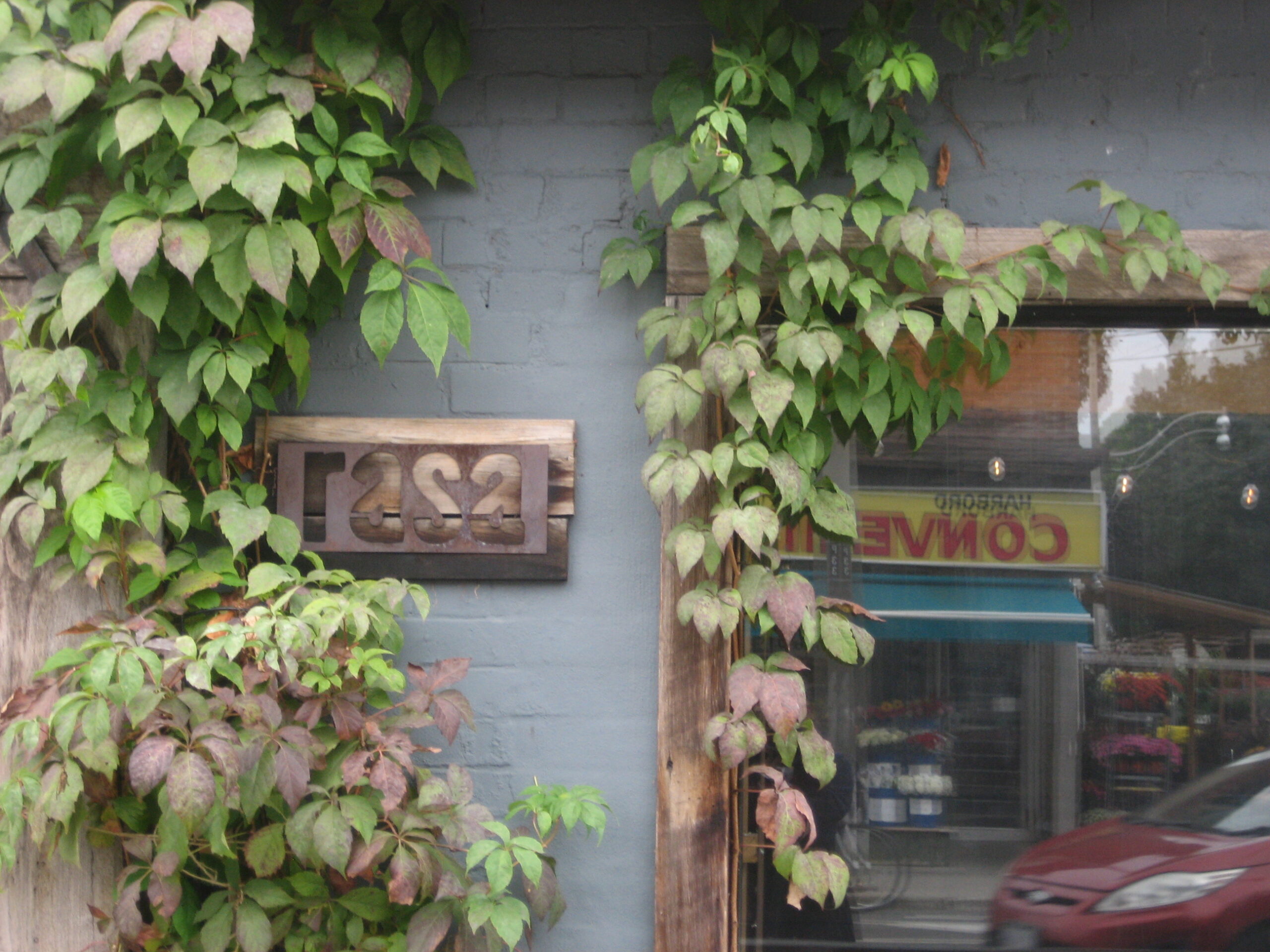
I had the recent displeasure of dining at the restaurant Rasa, located on Harbord and Robert (just south of Bloor in Harbord Village) when my boyfriend took me on a very entertaining dinner date.
I will begin with my first complaint, which is not about the food, but rather the general atmosphere, which was quite lacklustre. Rasa’s interior aesthetic choices lean brutalist, involving a lot of concrete, steel and stained wood; the colours reminiscent of a burned-out house. We opted to sit on the patio, which offered a more favourable atmosphere.
What then caught my eye was the dining population at Rasa, which was generally made up of finance-bro millennials trying to impress the office Pilates princess with something which I can only assume they thought felt foreign. There was the occasional older couple or young family, but these were a minority among the ex-frat bros and sorority girls.
I’ll be entirely transparent: I don’t care for experimental dining. When someone tells me a restaurant offers an ‘experimental dining experience,’ I picture a coked-out line cook thinking to himself, “I wonder if they’ll eat this? Ah, what the hell, they’ll eat anything!” How they managed to lower my expectations when they were already on the floor is beyond me.
We ordered the bánh mì roll and the grilled octopus. Our waitress made it clear these dishes were meant to be shared, so I expected decent portions capable of being split between two hungry adults. But when the bánh mì roll arrived at the table, I burst out into such vicious laughter that it was as if I was about to pee myself. When I read the words ‘bánh mì roll’ on the menu, I imagined the ingredients of a bánh mì transplanted inside a bread roll. Instead, they dared to serve us two depressingly minuscule spring rolls with a sneeze of carrots as garnish for a whopping twenty dollars. Although it did taste good, for the same price my boyfriend and I could have each enjoyed a whole bánh mì, maybe even two. The waitress, quite snootily, emphasized that she had “warned” us when I expressed my surprise.
The following dish was just as lacklustre as the first. We ordered grilled octopus, but what came to the table were three sad tentacles on a bed of assorted greens. The little octopus that there was was really quite pleasant; it was chewy but not to the point of feeling plastic. The salad, however, seemed as though they took all the leftover plant matter from the back of the fridge and dumped it onto our plate. From what I could gather, it was made up of a handful of arugula, way too much dill, some awkward chunks of heirloom tomato, a few random pieces of grapefruit, and purple potatoes that tasted like charcoal.
Rasa charges way too much for way too little, and they’re not the only restaurant guilty of this. People are limiting how much they go out, mainly because restaurants are raising prices without increasing quality. It seems that only a few decades ago, people regularly visited local cafés and restaurants with their friends and colleagues. 90s TV shows like “Friends” and “Seinfeld” show the resident coffee shop as a gathering place where people can hang out and discuss daily happenings freely and comfortably; some may know this as a “third place”. As prices rise and people’s freedom and willingness to eat out diminish, these everyday gathering places disappear, and we lose the ties that quietly bind us to our neighbours and friends.
Many coffee shops do not allow customers to buy a single drink and linger for hours. The attitude often tends to be one of shooing people out the door, further contributing to the growing chasm between people and their communities. I think it’s easy to feel as though relationships come with a price tag that many cannot afford, and dining out often fails to satisfy people’s hunger, not only for food, but also for socialization. Restaurants like Rasa hardly try to fix the situation, offering disappointing dishes for exorbitant prices and making dining out feel like a luxury, rather than something you do with your friends on a Friday night.
Tabula Rasa is an ancient Latin phrase, meaning “blank slate”; many who are knowledgeable in philosophy may recall this term from John Locke’s Blank Slate Theory. That being said, Rasa’s dining experience really made me feel like a tabula rasa.
