

An ongoing series, Decolonizing the Mind explores contemporary issues through conversations with York professors. Connecting academic knowledge with everyday experiences, the series invites readers to challenge assumptions and engage with the world through a critical lens.
We listen to music every day. On our commutes, in our homes, over grocery store speakers, through headphones, and across the content occupying our screens. How often do we really consider what we’re listening to? Beyond melodies, rhythms, and lyrics exist the cultural experiences, histories, and identities from which music emerges.
For Black music especially, this raises a question: at what point does cultural creation become cultural consumption, and what is lost in the process?
Black music’s extensive history cannot be separated from Black life. From spirituals and blues to jazz, reggae, dancehall, and hip-hop, the art form has preserved collective memory, challenged oppression, communicated displacement, and helped communities understand themselves.
Yet music born from these experiences often circulates through industries that treat artistic expression as a commodity.
To explore this relationship, I spoke with Keisha Bell, a musician and researcher whose practice incorporates Jamaican folk music, heritage Black American musical forms, and repertoire from the Caribbean and South America. Her research spans identity, social justice, geography, and Canadian jazz, offering insight into music’s relationship with the societies producing it.
For Bell, music offers an avenue into histories overlooked in conventional narratives. Her doctoral research examines the archives of a Black Canadian jazz drummer whose career crossed Toronto’s racial colour line. These records revealed a history of racial segregation within Toronto’s musical landscape that she hadn’t previously understood.
For instance, celebrated Black American musicians could perform in Toronto, but local Black audiences were sometimes prohibited from entering the establishments they performed in. As Bell observed, people welcomed the music and musicians while refusing to extend that acceptance to Black communities themselves.
Bell’s example demonstrates how music can be celebrated while its creators remain marginalized, displaying a sentiment of loving the creation but hating the creator. This contradiction persists in today’s music industry, where commercialization can detach artistic expression from its cultural origins.
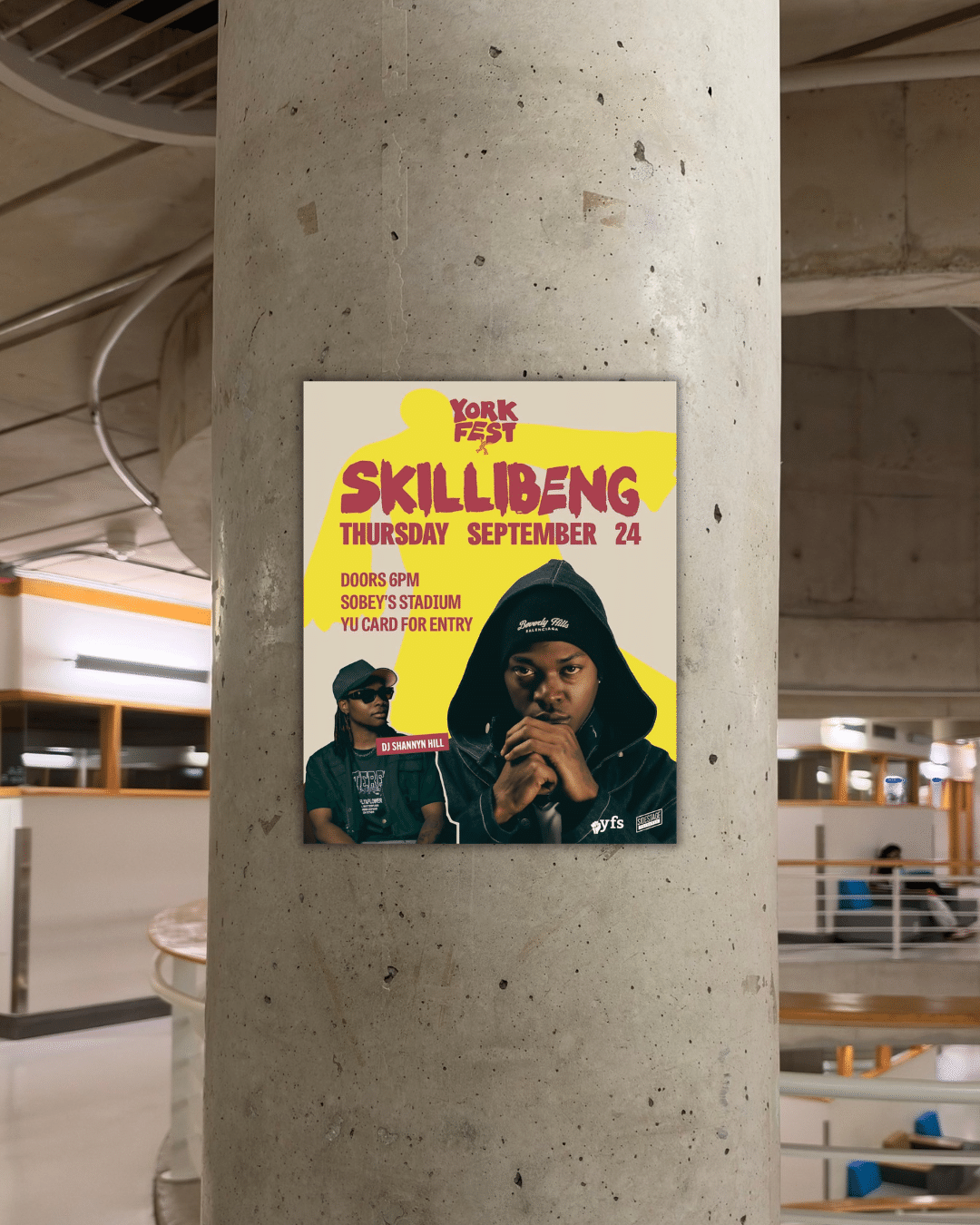
During our conversation, I raised Jamaican dancehall artist Skillibeng, whose YorkFest performance brought the genre to York’s student community. Dancehall emerged from Jamaica’s social, political, and cultural experiences. Yet its international popularity raises questions about how audiences understand the conditions inspiring its music.
Bell admitted she wasn’t familiar with Skillibeng, instead drawing a historical comparison through Bob Marley, his band the Wailers, and Island Records founder Chris Blackwell. Blackwell helped reposition the group internationally, transforming a Jamaican musical act into a global brand. According to Bell, Marley became a commercial product through decisions surrounding image, presentation, and marketability.
Our discussion returned to Skillibeng and criticism surrounding depictions of violence in dancehall. I questioned whether artists portraying violence might influence listeners unfamiliar with the circumstances behind their music.
Rather than locating violence exclusively within musical expression, Bell emphasizes its production as a result of social conditions. Blaming artists alone, she suggests, risks overlooking the inequalities shaping their experiences. “The system that produced the violence is also rewarding him for singing about the violence,” she explains.
An artist may be shaped by oppressive circumstances while receiving financial incentives to reproduce their imagery. This concept challenges the tendency to characterize Black music as either inherently revolutionary or socially irresponsible. Both interpretations can overlook the relationship between artistic agency and commercial expectations.
Our conversation shifted from the music industry to institutions responsible for teaching and preserving musical knowledge.
Bell recalled encountering a talented gospel pianist whose abilities were questioned because he lacked formal training, and challenged the assumption that European traditions of reading and notation should determine musical legitimacy, arguing that “there’s more than one way to learn music.”
For musicians raised within oral and communal traditions, learning through listening, observation, and participation can be equally meaningful. Bell’s reflections on cultural appropriation reinforced this concern. She suggests that appreciating music from another culture isn’t inherently appropriation, but believes that problems arise when people disregard its origins or exclude the communities responsible for it. Decolonizing music might then mean questioning not only who creates culture, but who holds the authority to define, teach, and profit from it.
Ultimately, our conversation returned to a personal dilemma: how do we resist becoming passive consumers?
Bell questions whether society has become so accustomed to measuring artistic value financially that creativity seems pointless without commercial success.
Reflecting on her own musical practice, Bell recalls the satisfaction of hearing others perform a composition she’d written. Its significance came not from financial reward, but from knowing her work had inspired someone else.
