

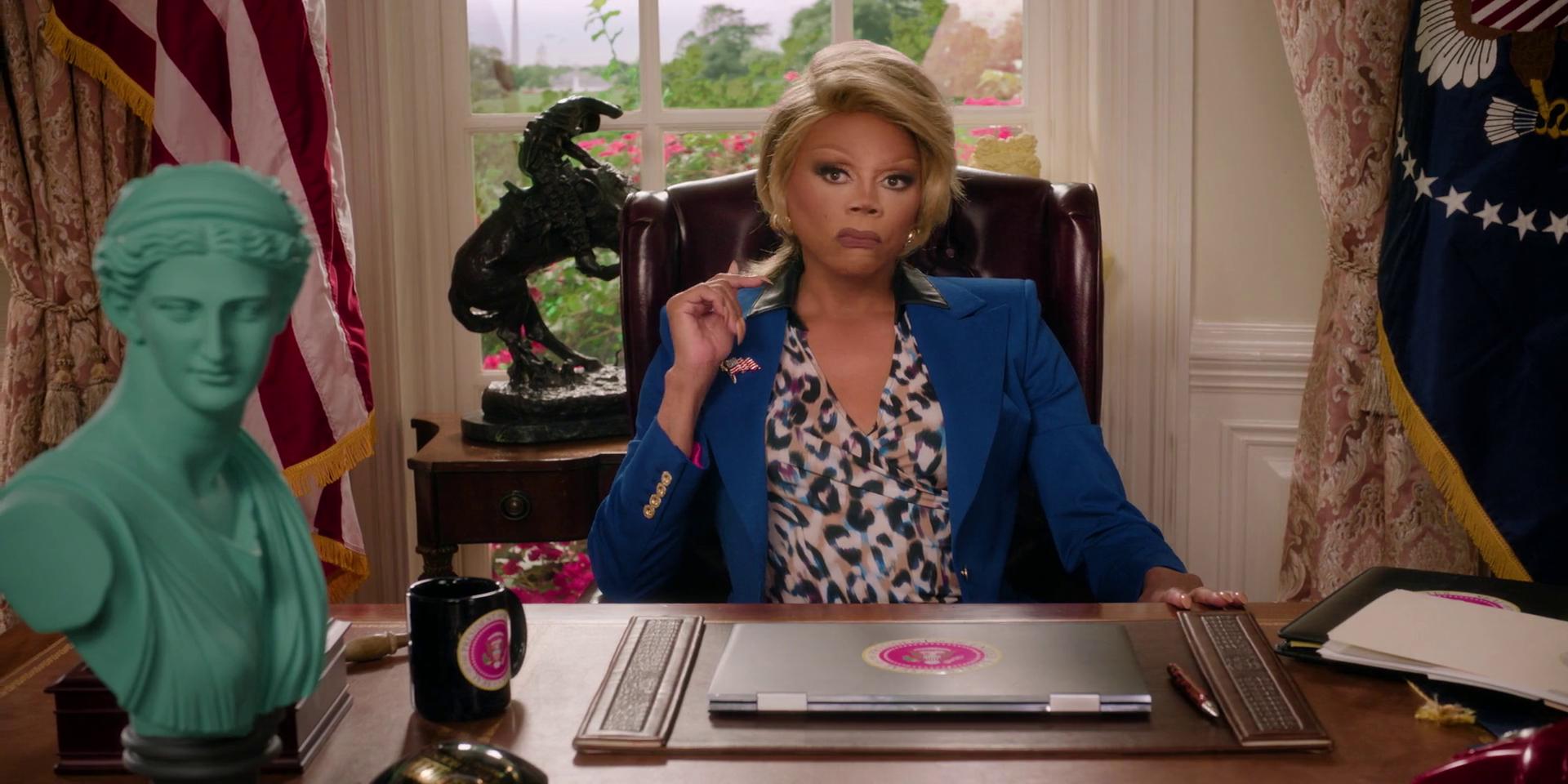
Stop! That! Train!, dir. Adam Shankman
In the fashion of old parody films like Airplane! (1980), Top Secret (1984), and Spaceballs (1987), Stop! That! Train! attempts to revitalize the spoof genre with its queer and kooky antics. Directed by Adam Shankman, best known for directing and choreographing the 2007 musical adaptation of Hairspray, Stop! That! Train! follows two low-class train attendants and best friends, played by Ginger Minj and Jujubee, who sneak onto a high-class train to elevate their careers. When a Stormaganza, the most destructive and catastrophic natural disaster, threatens the safety of the train, the best friends must find a way to stop it with the help of the upper-class stewardesses, a remote scientist (Rachel Bloom), and the president of the United States (RuPaul).
It is difficult to talk about this film without addressing the controversy that surrounds it. A series of accusations of generative AI usage were levied at the film, particularly in its VFX, which were initially denied by Shankman, later confirmed, and then denied again. When examining the evidence, it does seem as though generative AI was used to compose many VFX shots within the film. This is frankly disappointing given the clear amount of work and love that was put into the set and production design by many talented artists. While the film is clearly shot mostly using green screens for exteriors and backgrounds, and one can see as much in the film’s credits blooper sequence, much of the imagery in those backgrounds and in stock footage is AI-generated. Unfortunately, this blatant use of generative AI will turn many viewers off and has already caused many to boycott the film.
Controversy aside, the film itself is quite funny and succeeds in its premise. Like any good spoof film, Stop! That! Train! relies on visual gags, excessive exaggeration of generic elements, and characters taking the absurdity of their situations very seriously. Performances in this film range from passable to excellent. RuPaul’s turn as President Judy Gagwell and Latrice Royale’s ever-present Barbara are particularly noteworthy. Jujubee and Ginger Minj carry the film’s emotional core well, but are often outshone in the comedy arena. Many gags had me laughing out loud while others only elicited a brief nose-exhale, but the film maintained a good comedic rhythm throughout and upped the stakes with effective twists and turns. Stop! That Train! never reaches a level of hilarity or drama that makes it truly special or puts it in the upper echelon of those previously mentioned parody films, but it is an extremely silly, campy, and queer romp that, if you can get past its sketchy VFX, is worth a laugh. I recommend it to those that don’t take comedy too seriously.
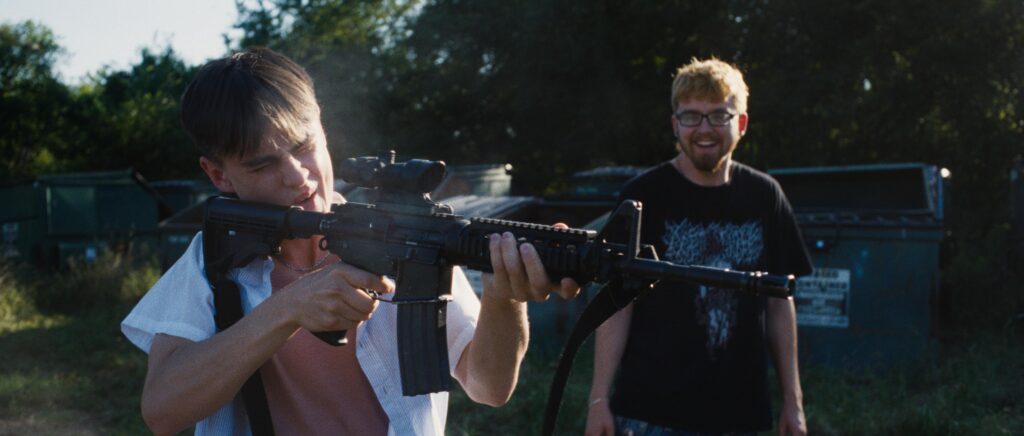
Our Hero Balthazar, dir. Oscar Boyson
Trigger warning: school shootings
Our Hero Balthazar is the directorial debut of Oscar Boyson, producer of films like Frances Ha (2012) and Good Time (2017), and is written by Boyson and Ricky Camilleri. Balthazar (Jaeden Martel) is a wealthy teenager living in a bourgeois New York apartment who develops a fascination with social media’s ability to unite an audience through tragedy. Thanks to the unfortunate combination of a fixation on school shooting victim response videos and the desire to impress his activist crush, Balthazar becomes obsessed with the idea of stopping a shooter before they have the chance to strike. In Texas, Solomon (Asa Butterfield) displays signs of asociality and violence before he is suddenly contacted and soon visited by Balthazar, a stranger on the internet intent on helping him change his ways.
The film itself is heavy, with sensitive subject matter that does much more than stoke outrage. Our Hero Balthazar masterfully walks the line between horror and empathy, depicting characters trying so hard to be something they aren’t, further isolating themselves and one another in the process. Somehow, amidst the heavy themes and constant threats of violence, the film balances an equal amount of comedy both in the script and in the actors’ performances. Martel delivers such a specific kind of persona in this character that makes my skin crawl and has me noticing how often I blink. Butterfield’s performance teeters between incredible sadness and a faux-cool detachment that belies his insecurities. Stylistically, the film makes heavy use of handheld camerawork to emphasize the tension, both malevolent and homosocial, between the two leads.
Our Hero Balthazar comments on social media, masculinity, wealth inequality, the cyclical nature of violence, performativity, identity politics, loneliness and isolation, mental illness, and many other ails of the 21st century in ways that feel somehow concise enough for a 94-minute runtime. The question of masculinity and its relation to violence looms over the film, as it asks what men with nothing to offer and nothing to lose are willing to do to be seen. The conflicting emotions I experienced during this film are hard to process, as the sensitive material here is heightened to a degree that renders it extremely digestible, funny, and thought-provoking. This film is receiving a very limited release, so seek it out, watch it with others, and start discussions. Highly recommend!
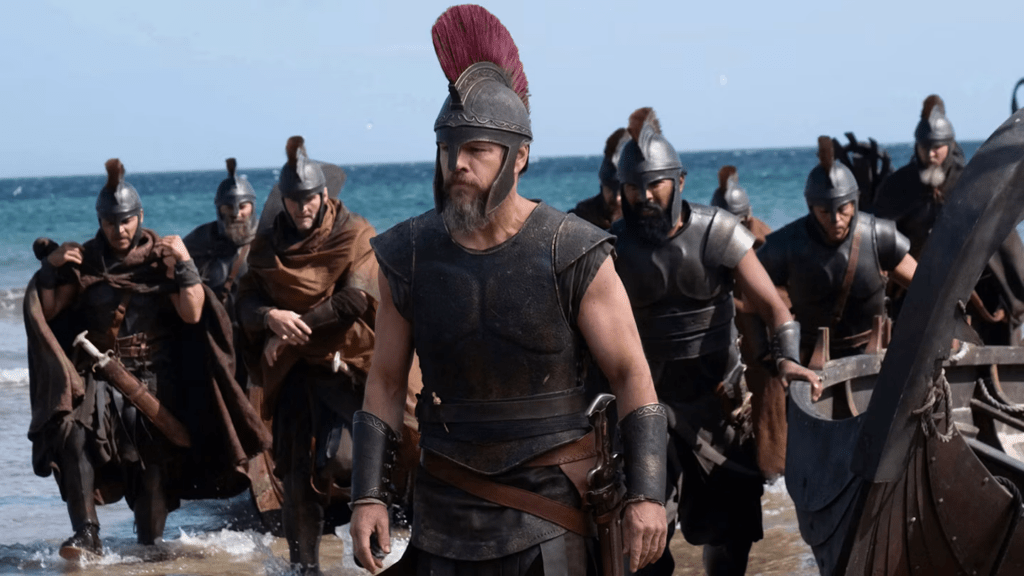
The Odyssey, dir. Christopher Nolan
Nearly 2,700 years ago, Homer’s epic poem The Odyssey was composed. Adaptations have come and gone throughout history, and its most recent version is the newest feature film by renowned filmmaker Christopher Nolan.
This iteration is grand. The film’s cast is made up primarily of A-list actors, such as Matt Damon, Anne Hathaway and Tom Holland, who perform brilliantly under Nolan’s direction. Damon flawlessly captures the intensity and vulnerability Odysseus faces on his treacherous journey with his fellow warriors down the Mediterranean Sea, as he hopes to return home to his throne and reunite with his son Telemachus (Holland) and wife, Penelope (Hathaway). Holland brilliantly delivers Telemachus’ coming-of-age transformation from merely being known as the boyish son of Odysseus to a strong and brave successor of his father’s throne. Hathaway’s masterclass performance as the fierce and independent Penelope shines as she convincingly portrays a woman who desperately longs for Odysseus to return home after many years apart. Given the grand scale of Homer’s epic, it would naturally be difficult to adapt the story for the screen. However, Nolan masterfully omits elements of the epic to ultimately deliver an emotional, impactful and well-told story.
From the dark great hall in Odysseus’ palace to the bright blue Mediterranean Sea, cinematographer Hoyte van Hoteyma delivers an incredible visual experience, that feels almost sublime, particularly in its native IMAX 70MM format. There is one particular scene where I felt totally immersed: Odysseus and his crew are crammed inside the dark Trojan Horse while their enemies are puncturing the structure with their swords. The warriors inside are overcome with an intense fear for their lives that seemed to ripple through my screening’s audience.
Not to be ignored are the film’s stunning special effects. I was surprised to learn that the giant in the cave, Polyphemus, was created predominantly through practical effects, with the exception of its eye, which uses visual effects (VFX) thanks to eight-time Academy Award-winning VFX studio DNEG. Nolan is well-known for his appreciation of classic filmmaking techniques, and his production team’s impressive execution was enhanced by the digital post-processing.
The film’s composer, Ludwig Göransson, does a spectacular job on the score. The music is beautifully crafted to complement every scene, and Göransson expertly utilizes Ancient Greek instruments to create moments that feel authentic and immersive. He also collaborates with James Blake and Travis Scott on the film’s end-credit song, “When I’m Home”, where Scott plays his role as a bard.
Overall, I rate this film five out of five. Though it isn’t a surprise for Nolan to present a highly polished film, I was nonetheless extremely compelled by the experience. If you have the chance to enjoy this spectacle in the IMAX 70MM format, I would highly recommend doing so, as it only adds to the overall immersion. The culmination of all its well-executed parts makes Nolan’s Odyssey a memorable masterpiece worth watching!
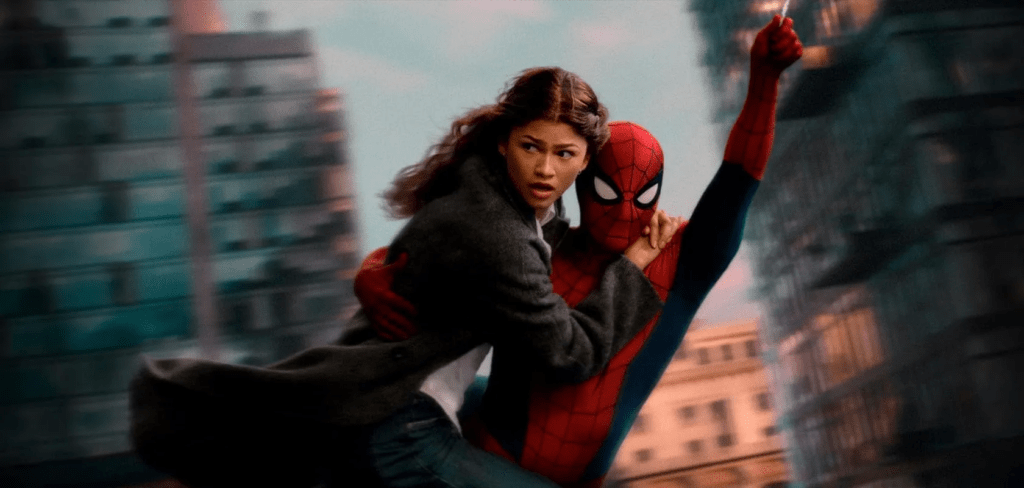
Spider-Man: Brand New Day, dir. Destin Daniel Cretton
Sony Pictures’ Spider-Man film franchise has been around for 25 years, beginning with Tobey Maguire, then Andrew Garfield, and currently, Tom Holland. Audiences have yet to tire of the webslinger, as evidenced with Spider-Man:Brand New Day. Holland’s fourth Spider-Man film is the highest-grossing yet, surpassing $2 billion at the global box office.
The film’s director, Destin Daniel Cretton, is no stranger to Marvel movies, having previously directed Shang-Chi and The Legend of the Ten Rings. He brought his experience filming the fight sequences in that film into Brand New Day, creating thrilling combat spectacles. Cretton did an excellent job directing the film, bringing out the cast’s strengths, with breakout performances coming from Tom Holland as Peter Parker and Sadie Sink as Jean Grey. Holland switches between the wisecracking Spider-Man and awkward Peter Parker with incredible ease. Sink’s portrayal of the sinister yet vulnerable Jean Grey was positively unsettling. Jon Bernthal’s role as the Punisher adds comic relief to the film, with genuinely funny quips and a partnership with Spider-Man that is hilarious given the characters’ vast differences. Zendaya (MJ) and Jacob Batalon (Ned) reprise their roles, though their scenes together with Parker are limited. Given the trio’s undeniable on-screen chemistry, the brief interactions they shared were some of my favourites, simultaneously wholesome and bittersweet when considering the series’ preceding installments.
Screenwriters Chris McKenna and Erik Sommers wrote a solid stript, although they could have fleshed out Peter Parker’s personal life to better convey the toll he endures when sacrificing it. More screen time for Sadie Sink’s Jean Grey would have helped round out her character and allowed the audience to empathize with her on a deeper level, particularly given the sheer amount of chaos she causes throughout New York City in most of the film. The film features prominent villains such as Michael Mando’s Scorpion and Marvin Jones III’s Tombstone, but their limited screen time adds little to the film’s plot. It would have been beneficial to cut Scorpion and Tombstone from the story to allocate a more appropriate amount of time to Grey’s character arc.
Cinematographer Brett Pawlak has collaborated with Cretton on numerous films over the years, a history that pays off in the high fidelity of Brand New Day. The Holland Spider-Man franchise finally shows an in-depth look of Spider-Man web swinging through the streets of Manhattan, and thanks to Pawlak, it turned out to be a visual delight. The colour grading of the film was noticeably less vibrant than the previous three, which helped reinforce the story’s more mature themes.
Michael Giacchino’s score delivers familiar motifs from his previous Spider-Man scores while introducing fresh elements. Thanks to this blend of old and new, the listening experience feels akin to reuniting with your best friend after five years. His orchestral score is traditional yet contemporary, with “Suite New Day” in the end credits being a prime example.
As a whole, I rate Spider-Man: Brand New Day three out of five. While the direction, cinematography, and score are all cleanly executed, the story feels lacking in ways that pure superhero spectacle can’t fully distract from. Considering the more mature direction the series has taken, I would have liked to see a tighter script that emphasizes key character moments and emotional beats.

Wow! These are an amazing reviews 🙂