

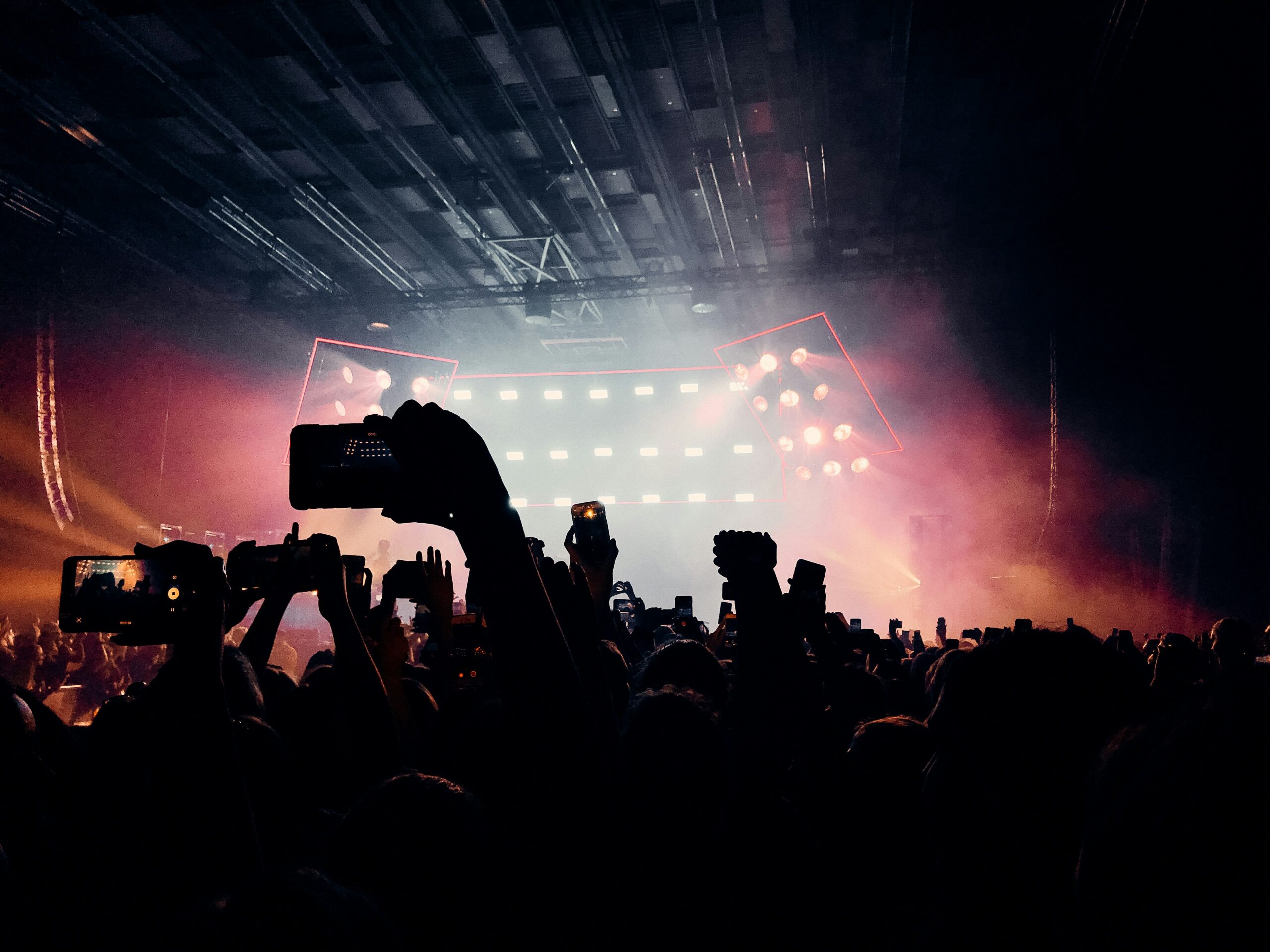
As summer comes to a close, so too does the concert season. Fans have danced and sang their way through the warmer months, and while unanimously fun, it has also sparked conversations regarding the kind of behaviour deemed appropriate at live shows.
Since the dawn of the smartphone era and the resulting social media boom, there have long been calls for improved concert etiquette. Rolling Stone published its first article addressing concert-goer behaviour in 2013, mainly focused on rowdy and rude behaviour like heckling rather than cellphone usage. With social media at the precipice of taking off as a primary form of communication, technology had yet to become a major part of the discussion. Anaiya, a fourth-year Dance major, believes that concertgoers “danced more because they weren’t trying to stay still while recording.” Compared to their recent concert experiences, Anaiya says, “it was just an overall better environment.”
This year, Rolling Stone set out new parameters, and the cultural shift is clear: cellphones have become a major concert nuisance. “I was at Beyoncé and there was a person scrolling on Facebook,” recounts Anaiya. “I think maybe there should be [technology] restrictions put in place.”
From up on stage, artists have also been noticing the uptick in audience reliance on their phones. Performers like Phoebe Bridgers and Harry Styles have recently performed concerts where cellphones and other recording devices were prohibited, placed into tamper sealed bags by door staff. While the reasoning varied from reducing online spoilers during Bridgers’s tour to what might have been a simple marketing stunt – Styles’s concert provided disposable cameras as souvenirs – these decisions have been met with praise from some audience members.
“[No-phone concerts are] really cool. I think that adds to the experience,” says Athena Philippou, a York University Cinema and Media Arts alum currently working as a photographer and videographer. It’s also worth noting that both concerts were priced low to make up for the phone policy. This decision to reduce ticket costs reflects another element at play: the contemporary concert experience inherently includes documentation, and withholding that ability should be compensated in the form of a discount.
Fans that record and post concert footage often use it to remember the event for years to come and connect with a wider fan culture. “I don’t think phones hinder the experience for everyone.” says Philippou. “If you want to capture the moment, be my guest.” For many fandoms, fancams and edits made from personally-recorded concert footage are the main modes of fan labour. Those fans are paying for both the live experience and the recorded one. Seeing as concert tickets can cost thousands, some may argue that fans are well within their rights to want to record the event.
This perspective is particularly prevalent in the K-pop sphere. In an article from March of this year, The Korea Times highlighted that “capturing the moment has become nearly as important as experiencing it. For many fans, filming a performance has turned more into a carefully planned mission than a spontaneous decision.” Being a K-pop fan themselves, Anaiya says that the genre and social media “go hand in hand,” and that “not being on your phone is kind of a challenge.”
As cellphones continue to dominate concert crowds, artists and fans alike will continue to push back against digital culture. Whether no-phone concerts will become the norm or die out completely is hard to say. But unless structural policies are put in place, many will continue to document live shows at the behest of others. “It’s live music, but we also live in an age of technology, so if you want to record it for the memories, by all means,” says Philipou. “I really don’t care what other people do.”
Should phones be prohibited from concerts, or do they contribute to the experience beyond the show’s conclusion? Send a letter to the editor with your thoughts on the matter to arts@excal.on.ca.
