
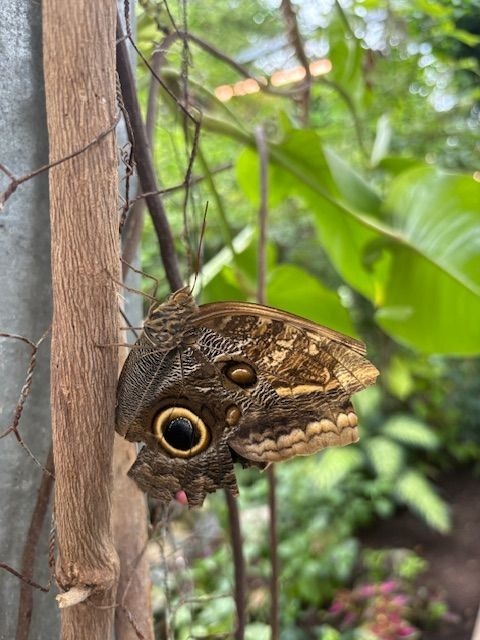
We call them bugs, pests, and creepy-crawlies. Many a time, we wish we could do without them.
But Dr. Sandra Rehan, a professor at York specializing in molecular ecology and behavioural genetics, speaks highly of little arthropods. “Collectively, they are among the most important organisms supporting life on Earth,” she says.
Arthropods (lit. “jointed foot” in Greek) are described as a broad category of invertebrate organisms with segmented bodies, jointed legs, and a hard exoskeleton composed of chitin. The most extensive arthropod phylum is Arthropoda, encompassing roughly 84 per cent of identified animal species. Globally, there are around 1.5 million, 5.5 million, and 7 million species of beetles, insects, and land-dwelling arthropods, respectively. Arachnids, centipedes and millipeds, and crustaceans are also encompassed within Arthropoda. Rehan adds that “scientists have described more than a million arthropod species, but many more remain undiscovered or poorly studied.”
The abundance of arthropods is important to life on Earth; insects like bees and butterflies are responsible for delivering one out of every three morsels of food to us. They also support our ecosystems and generate our natural resources by assisting in plant reproduction. Millipedes are vital components of various ecosystems and are essential for decomposing dead plant matter and enhancing soil fertility. Although some see them as visually unappealing, they are valuable beings that contribute to a healthy ecosystem. Spiders, an arthropod that many fear, are nature’s natural exterminators that balance ecosystems and reduce the spread of diseases; they also act as our friendly neighbourhood biodiversity indicators.
If every arthropod disappeared overnight, Rehan says that “we would no longer hear bees buzzing, crickets chirping, or see butterflies.” Impacts beyond the immediately noticeable would be even more significant. “Countless ecological interactions would stop,” Rehan explains, “including pollination, decomposition, and the transfer of energy through food webs.” According to her, we would experience a loss in human life as a whole.
“Humans could potentially survive, but our food systems would be fundamentally transformed.” According to Rehan, insect pollination contributes to “approximately 35 per cent of global crop production by volume.” Staple crops, including wheat, rice, and corn do not require insect pollination and would remain largely unaffected. However, many fruits, vegetables, nuts, and other nutritious foods would “become scarce or disappear from commercial production,” constituting a severe disruption for global food security.
Beyond pollination, Rehan points out the “loss of arthropods would disrupt soil fertility, decomposition, and ecological processes that support agriculture.” Dung beetles are responsible for the breakdown and reuse of manure in the ground, allowing its nutrients to circulate within an ecosystem. Dung beetles offer numerous advantages for the well-being and operation of both natural and human-altered ecosystems by dispersing seeds, decreasing livestock parasites, and enhancing plant growth. Ants cultivate and aerate the soil, enabling water and oxygen to access plant roots.
Close to home, the Least Davis’s Shieldback, a peculiar-looking katydid that boosts soil health and acts as a scavenger, is a very helpful tool for the forested areas of Ontario to have – though it is close to extinction.
When an arthropod is threatened, the entire ecosystem is at risk, in what Rehan calls a “cascading event.” A dramatic decline would lead to several species extinctions, as arthropods form the foundation of countless food webs, providing essential nutrition for birds, amphibians, reptiles, fish, and mammals.” Species that specialize in feeding on insects would be particularly vulnerable, while other more generalist predators might switch to alternative food sources. However, “these changes would increase competition and place additional pressure on other species. The consequences would extend far beyond animals that directly consume arthropods,” says Rehan.
But to consider a life without arthropods, sometimes no imagination is needed – many species are already on the brink of extinction. Rehan highlights that many insect populations “already face pressures from habitat loss, pesticide exposure, climate change, and other environmental disturbances.” Arthropods make up about 84 per cent of the animals on Earth, and have existed for approximately 500 million years, with the oldest recognized fossils tracing back to the Cambrian Period. They are a symbol of resilience, having experienced mass extinctions yet remaining evolutionarily successful. Nature has given them an advantage, which Rehan attributes to “evolutionary versatility.” Exoskeletons, segmented bodies, specialized appendages, and diverse reproductive strategies have allowed arthropods to occupy nearly every habitat on Earth. Their evolutionary history demonstrates an exceptional capacity to diversify, adapt, and integrate.
Rehan hopes people begin to “recognize that insects and other arthropods are not simply pests or inconveniences, but essential components of healthy ecosystems.” These integral actors can be protected by “planting native flowering plants, reducing unnecessary pesticide use, protecting natural habitats, and leaving areas of undisturbed vegetation for insects to nest and overwinter.” Preserving arthropod biodiversity ultimately means protecting the ecosystems that sustain us.
The next time you see a tiny crawler walk across your garden, hide in the crevices of your living room, or take a breather on your arm mid-notetaking, remember that they too are experiencing life while working hard. Arthropods might not be large or conventionally cute, but they truly are wonders of the world.
